
The Arithmetic of Murder
Crime and PunishmentThe novel’s utilitarian argument for killing develops through a remembered debate, Raskolnikov’s private calculations, and the disorder of the actual crime.
increasing Bearing strength in each event
 decreasing
Bearing strength in each eventdecreasingThe Student’s Proposition
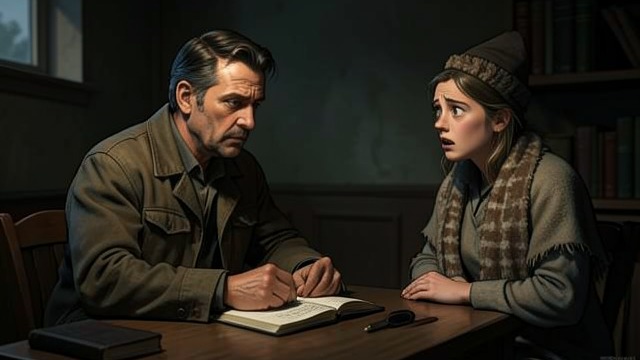
The Student’s Proposition
Lives as a Calculation
Raskolnikov remembers hearing a student describe Alyona Ivanovna as harmful and useless. The student argues that her money could support many lives if she were killed and her wealth redistributed.
The formulation reduces a person to a quantity in a balance sheet. Its neatness attracts attention precisely because it appears to turn moral uncertainty into simple arithmetic.
The Objection of Action
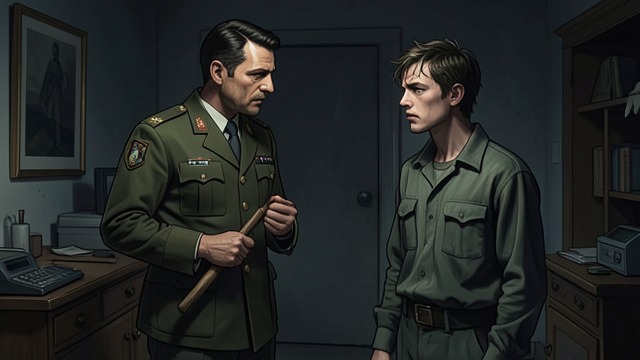
The Objection of Action
Principle Without Personal Risk
An officer challenges the student to say whether he would kill Alyona Ivanovna himself. The student retreats, calling his remarks an argument rather than a plan.
The exchange exposes a gap between judging violence in theory and accepting responsibility for it. Raskolnikov remembers the conversation because it anticipates his own temptation to mistake intellectual permission for moral authority.
The Worthless Victim
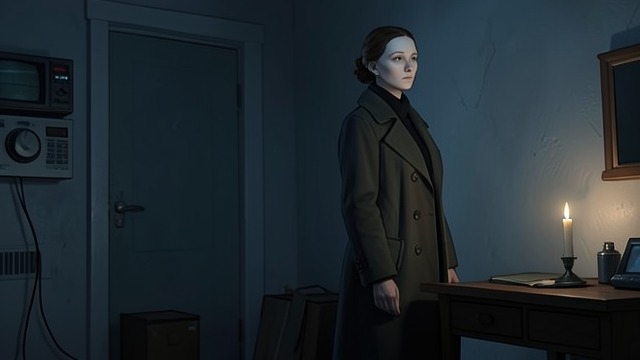
The Worthless Victim
Personal Disgust
Raskolnikov’s first encounter with Alyona Ivanovna produces immediate repulsion. Her harsh treatment of debtors and control over Lizaveta Ivanovna later fit the image of a person whose life can supposedly be discounted.
But his response is not an impartial social analysis. His poverty and humiliation shape his attention, complicating the claim that his judgment arises solely from concern for others.
The Percentage Defense
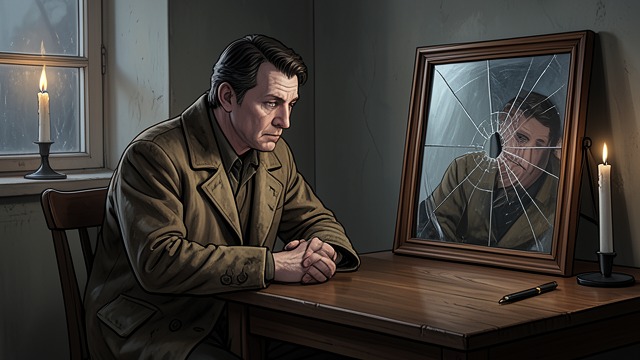
The Percentage Defense
Suffering Made Statistical
After seeing the intoxicated girl, Raskolnikov imagines that society accepts a certain percentage of people being ruined. The phrase makes preventable suffering sound inevitable, scientific, and therefore beyond individual responsibility.
He wonders whether Dounia could become one of those people. The thought unsettles him because it brings the abstraction back into his family, but he still uses statistical language to keep suffering at a distance.
Arithmetic Meets Blood
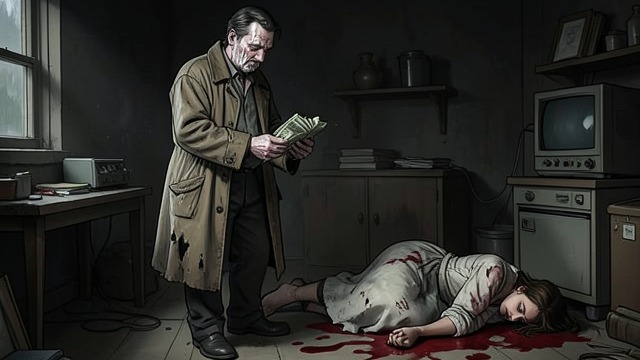
Arithmetic Meets Blood
The Plan Breaks Apart
Raskolnikov kills Alyona Ivanovna, but Lizaveta Ivanovna arrives unexpectedly and is killed as well. The actual event immediately exceeds the supposed calculation of one death for many benefits.
He does not calmly redistribute the money or transform it into aid. He grabs what he can, loses control of his attention, and flees in terror, leaving the utilitarian justification exposed as a theory unable to govern its consequences.
Several weeks before the murders, in a tavern conversation recalled later
During the same remembered tavern debate
During Raskolnikov’s first visit to the pawnshop
The day after the mother’s letter
The evening of the murders
